


Mindset & Motivation, Productivity Strategies, Podcast Articles | Apr 19, 2026
We’re all tied to our phones. Here’s how to take back control.

By Angela Watson
Founder and Writer
We’re all tied to our phones. Here’s how to take back control.
By Angela Watson
I picked up my phone to check the weather the other day, and twenty minutes later, I was still standing in my kitchen, having bounced from app to app through a chain of perfectly legitimate tasks that I never actually chose to do in that moment.
I wasn’t scrolling mindlessly.
I was checking my steps, signing up for a yoga class, responding to my husband’s text, following up on a bank alert. And I still lost the thread of my own day.
That’s what makes our relationship with phones so hard to examine. It’s not all mindless scrolling. Our phones are genuinely useful tools, and that’s exactly why we never put them down. We’ve adapted so completely to being constantly tethered to our devices that we’ve forgotten what it feels like to have a mind that isn’t always being filled with input.
And, we reach for our phones in every spare moment, not because we need to, but because we have two minutes to kill and our brains have been trained to say “phone” before we’ve made a conscious decision.
Something interesting has shifted in recent years, too. A lot of us have pulled back from posting on social media, but we haven’t pulled back from our phones. We’ve just become passive consumers instead of active participants, and the tethering hasn’t loosened at all.
In this article + podcast episode, I walk through three simple habits that have helped me reclaim my time and attention, habits I still have to practice every day. I’ll share the most recent data on phone usage from the 2026 Reviews.org report, explain how our apps are engineered to keep us engaged through intermittent rewards, personalization, and instant gratification, and talk about why mindfulness, which just means paying attention to how you feel, is the foundation for lasting change.
I also share why I believe doing this work alongside our students is far more powerful than just enforcing phone policies at them. When students see that their teacher is honest about struggling with the same thing they do, it stops being about compliance and becomes about awareness and choice. I reference high school teacher Ashly Hilst’s approach from Episode 306, where her message, “Phones don’t make good moments, people do” stuck with students in a way that traditional policies never had.
Whether you want to start with your own habits or bring this conversation into your classroom, this episode will give you a framework for helping yourself and your students take back control of how you spend your time and attention.
If you want to put these three habits into practice for yourself, I have a free 21-day Intentional Connectivity Challenge. It’s one email per week for three weeks, each one focused on building one of these habits, with a follow-up check-in to help you stay on track.
If you want something more personalized, Motivation Lab is my coaching app that helps you understand how your brain works and build strategies that fit your natural tendencies. There’s a module called Take Control of Your Phone Habits that walks you through exactly what I’m describing here, and it also covers motivation, focus, and procrastination, because our phone habits are tangled up with all of those things.
And if you want to bring this work into your classroom, my Finding Flow Solutions curriculum has a full unit on healthy phone habits with student journals, slideshows, and discussion activities that are no-prep for you. There are versions for elementary, middle, and high school.
Sponsored by Motivation Lab and Finding Flow Solutions
Use the player or your favorite podcast app to listen above, or read the condensed transcript that follows.
Why it’s so easy to lose time on your phone
So I picked up my phone to check the weather the other day. Just the weather. And then I realized I wanted to check my steps, so I opened that app. And I thought, let me also sign up for the yoga class tomorrow, which happens in an app, and while I’m in the app, let me see if there are any special events coming up. And then let me check my email to make sure the confirmation came through. And wait, what’s this, an alert from my bank about a potentially fraudulent transaction, and a question from my accountant about taxes, and hold on, a text just came through from my husband asking if I need anything from the grocery store while he’s there, so let me check the notes app to see if there’s anything he needs to get.
And twenty minutes later, I was still on my phone. I couldn’t remember why I initially picked it up, or what I was doing before I picked it up. It was like the world around me froze in time, and I realized I was still standing in the kitchen. I’d been planning to drink some water, which I’d forgotten about, and was then going to take a shower and change my clothes, and I’d completely gotten off track.
And that’s the part that makes me exasperated. Not that I wasted 20 minutes, because I hadn’t really; most of those were legitimate tasks. But I didn’t choose that time and place to do them. I wasn’t aware of what I was doing while I was doing it. I had other things I’d intended to do with that block of time, and I stayed engaged with my phone anyway, one task chaining into the next into the next until I’d lost the thread of my own day.
And I say this as someone who has been doing intentional connectivity work for almost a decade. I created a whole 21-day challenge around this years ago. I teach students about it through my Finding Flow curriculum. And I still get pulled in.
Why this isn’t just “Phone Addiction”
I don’t think “phone addiction” is quite the right way to frame this for most of us. It’s more that our phones have become so embedded in how we manage every part of our lives that we’re never really untethered from them. They’re how we communicate, how we navigate, how we pay for things, how we track our health, how we manage our schedules, how we sign up for yoga class. They’re genuinely useful, and that’s exactly what makes the habit so hard to examine, because so much of our phone use feels justified.
Why we reach for our phones without thinking
But here’s what I’ve noticed, and I bet you’ve noticed it too: a lot of the time, we don’t pick up our phones because we need to do something. We pick them up because we have a spare moment. We’re waiting for the microwave to beep. We’re in line at the store. We’re sitting in the car at a stoplight. We have two minutes to kill, and our brain says “phone” before we’ve even made a conscious decision. And then once we’re in, one thing leads to another. We picked it up to check the time, and now we’re deep in a comment thread. We opened it to respond to a text, and now we’re scrolling through a feed. The phone doesn’t let you do one thing and leave. It always offers you the next thing, and the next thing, and the next.
Those of us who grew up before smartphones remember a time when we could sit in a waiting room and just… sit. When boredom was something you moved through, not something you immediately filled with a screen. When your brain had space to wander, daydream, and process things without being constantly bombarded with new input.
But we’ve adapted so completely to this state of continuous partial attention that we’ve forgotten what our minds felt like before. We don’t remember what we’re missing. We crave dopamine and the feeling of connection we get with the phone instead of actual presence with the people and moments right in front of us.
And our students? They never had it in the first place. They’ve been immersed in algorithmically-driven content since they were small children. Their developing brains have been shaped by tech companies whose entire business model depends on keeping people engaged for as long as possible.
Why we stopped posting—but not using our phones
Here’s what’s interesting, though. In recent years, a lot of us have actually pulled back from social media. We stopped posting. We stopped sharing as much of our lives online. I’ve done two video essays about this on my YouTube channel, So What Are We Doing Here. One is about how we’ve become a culture of consumers instead of creators, and the other is coming soon, called “Why Nobody Posts Anymore (And What We’re All Doing Instead).”
And that shift is telling, because it means a lot of us have already recognized, at least on some level, that social media wasn’t making us feel great. We pulled back from the posting part. But we didn’t pull back from our phones. We just traded one kind of compulsive use for another. Instead of posting and checking for likes, we’re endlessly consuming other people’s content, watching videos we didn’t choose to watch, reading arguments we have no stake in, scrolling through feeds that leave us feeling empty.
The tethering didn’t loosen just because we stopped posting. It just changed shape. And the phone is still the first thing we reach for when we wake up, the last thing we look at before bed, and the thing we default to in every spare moment throughout the day.
How often we check our phones (and why it matters)
According to a January 2026 Reviews.org survey, Americans check their phones an average of 186 times per day. That’s roughly once every five minutes while you’re awake. 84.6% check within the first 10 minutes of waking up. 46% describe themselves as “addicted” to their phones, and 41% say they feel panic or anxiety when their battery drops below 20%. I’ll link to the full report in the show notes.
And what strikes me most about those numbers is that people generally don’t feel great about their phone use. They know it’s too much. They can feel it in their bodies, in their mood, in their ability to focus. They just don’t know how to change it, or they haven’t been motivated enough to try, because the pull of the habit is stronger than the discomfort of staying in it.
How phones affect focus and deep thinking
And we’re not just losing time when this happens. We’re also losing our ability to concentrate and think deeply.
Our best ideas come when our minds have the ability to wander a bit. You know how you can wrack your brain for hours trying to solve a problem, and the moment you stop thinking about it and go for a walk or get in the shower, the solution just pops into your head? That’s because you finally stopped overstimulating your brain and gave it a few minutes to daydream. But when we’re tied to our phones in every spare moment, we’re losing the ability to be still and let answers surface from that quiet place within us. We’re constantly filling our minds with more input instead of allowing ourselves time to process what we already have.
3 habits that can help you take back your time
I want to share three habits that have made a huge difference for me. These aren’t complicated, and they don’t require you to give up your devices. The goal is to choose how you use your phone instead of just being pulled along by it.
Habit 1: Turn Off Non-Essential Notifications
Reconfigure your notification settings to match what you actually care about.
So much of our phone use isn’t even our choice. It’s a response to a ping. Your phone buzzes, you look. Someone posts, you get an alert, you tap. You’re basically on call for every app on your phone, all day long.
So try this: turn off notifications for everything except the people and apps that truly need your immediate attention. I’m talking about real emergencies, the people you need to be reachable for at all times. For everything else, you can choose to check when you’re ready. 99% of the apps on your phone should not be sending you alerts.
When you do this, notice how it makes you feel. You might be surprised how much calmer you are when your phone isn’t constantly interrupting you. And when you do check social media or your messages, you’ll see a bunch of interactions all at once, and it actually feels more satisfying than reading each one as it trickles in throughout the day.
If your phone isn’t pinging you anymore and you’re only checking on your own terms, that’s a meaningful shift. You’re choosing when you engage instead of being summoned.
Habit 2: Create Phone-Free Morning and Night Routines
Choose morning and bedtime routines that feel better than being on your phone.
Starting your day by looking at social media or email makes you vulnerable to emotions you didn’t choose. Depending on what you see, you could end up feeling angry about a political post, sad about someone’s bad news, or anxious about a work email, all before your feet even hit the floor. Your first thoughts and actions set the tone for your entire day, and your last thoughts before bed set the tone for your sleep quality.
When you scroll through a feed right before sleep, you’re almost guaranteed to see something that activates your brain at the exact moment you need it to wind down. And in the morning, getting pulled into 15 minutes of messages or gossip means your whole morning feels rushed, and your mood is no longer in your hands.
So what do you do instead? That’s up to you. Maybe you read a book for a few minutes. Maybe you stretch or meditate. Maybe you just drink your coffee and look out the window and let your mind settle before the day begins. Choose whatever makes you feel balanced and grounded, and do that first. Then check your phone.
At night, try not to look at your phone after you get into bed. Just try it once and notice how you feel. Notice how you sleep.
On the days when you slip back into old habits, and you will, just notice how you feel. Don’t beat yourself up about it. Just observe the difference. That noticing is what motivates you to make a different choice next time.
Habit 3: Let Yourself Be Bored
Give your mind space to wander during moments of boredom instead of automatically reaching for your phone.
Do you check your phone when you’re sitting in the car at a stoplight? Waiting in line? Standing in an elevator? Faced with a boring task and just wanting something fun for a second?
Nothing truly satisfying can happen during a 30-second scroll. You’ll either be still bored, and now also feeling a little empty, or you’ll find something interesting that you can’t actually pay attention to because the light changed, or it’s your turn in line.
Can you try, just once, to sit with that moment of boredom? To let yourself just breathe and daydream for a few seconds? To use that little pocket of time as an actual break, one that refreshes your mind instead of filling it with more stuff to process?
The first time you try this, it will feel weird and uncomfortable. But each time you do it, it becomes more natural. And you’ll start to notice something: your mind feels clearer. Solutions to problems pop up out of nowhere. You feel less frazzled and more present.
That’s what happens when you stop constantly filling your brain with input and give it some room to just… be.
Why we need to do this work alongside our students
Everything I’ve described so far applies to our students, too. They’re experiencing the same constant tethering to their devices, the same difficulty sitting with boredom, the same pattern of one thing leading to another until half an hour has disappeared. But for many of them, this is all they’ve ever known. They’ve never experienced what it’s like to have a mind that isn’t constantly being filled with input, and nobody has ever explicitly taught them what’s happening in their brains or given them strategies to manage it.
And I think the most powerful thing we can do is be honest about the fact that this is a human problem, not just a kid problem. When students feel like the phone policy is something adults are imposing on them, it creates resistance. But when they see that we’re dealing with the same thing and we’re working on it alongside them, something shifts. It becomes less about compliance and more about awareness and choice.
I did a really popular episode a while back, Episode 306, where high school teacher Ashly Hilst shared how she gets true student buy-in for her no-cellphone policy. Her core message to students is “Phones don’t make good moments. People do.” And what made her approach so effective is that she framed it as a life skill, not a classroom rule. She was honest about the fact that adults struggle with this, too. She shared personal stories about times her phone got in the way of being present with her own daughter. And the results were remarkable. A parent told her afterward, “I’ve been saying this to my kid for months, and she never listened. She came home after your presentation and said, ‘Mom, phones don’t make good moments. People do.'” I’ll link to that episode in the show notes if you want to hear Ashly’s full approach, including a free copy of her presentation slides you can use with your own students.
What I’m talking about today builds on that same foundation, but goes a step further, into helping students understand why their devices are so hard to put down and giving them the awareness to make their own choices.
Why Phones Are So Hard to Put Down
Understanding how our devices are designed to keep us engaged
Our phones and apps aren’t accidentally compelling. They’re engineered that way. And I think when students and adults understand the mechanics of this, it becomes a lot easier to make conscious choices.
The biggest one is intermittent rewards. When you achieve a high score in a game or get likes on a post, your brain releases dopamine, that feel-good chemical that’s linked to pleasure and motivation. But the rewards don’t happen every time. Sometimes you scroll, and nothing interesting happens. And then, just often enough, something gives you that little hit. This unpredictability is what keeps you coming back. It works the same way slot machines work: you keep pulling the lever because the win might be next.
Then there’s personalization. TikTok, YouTube, and video games, they all learn what you like and feed you more of it. Your experience online feels tailor-made for you, which deepens your emotional investment and makes it harder to walk away. Looking at someone else’s feed can feel like you’re on the wrong side of the internet, because you are. Your corner of the internet was designed specifically to keep you engaged.
And there’s instant gratification. Social media gives us immediate feedback. You post something, people react. You play a game, you level up. In real life, achieving goals takes a lot more time and effort. It takes longer to learn a subject and pass a class than it does to create and share a reel. Our brains are naturally wired to prefer the quick payoff, and our devices deliver that all day long.
Understanding all of this is genuinely helpful because when you can name what’s happening, you have a tool for stepping back and making a conscious decision. When a student can say, “Oh, that’s the intermittent reward thing pulling me in,” they’re already in a different relationship with their device.
The role of mindfulness with phone habits
Everything I’m describing comes back to one concept: mindfulness. Not in some esoteric, complicated way. Mindfulness just means being aware of what you’re doing and how it makes you feel. That’s it.
When you notice, “I’ve been on my phone for 20 minutes, and I didn’t even mean to be,” that’s mindfulness.
When you catch yourself reaching for your phone and pause to ask, “Do I actually need to do something, or am I just filling a spare moment?”, that’s mindfulness.
When you slip back into old habits and instead of beating yourself up, you just observe how it makes you feel and let that inform your next choice, that’s mindfulness.
You can teach this to students by simply asking them to pay attention to how they feel during and after screen time. That’s the whole assignment. No judgment, no punishment, no guilt. Just noticing.
I find that when students start paying attention, the awareness itself becomes the motivation. They notice: “I stayed up until 2 am watching videos, and I was miserable the next day.” Or: “I checked my texts before school, and that rude message threw off my entire morning.” And the next time they’re in that situation, they have their own lived experience telling them, “That didn’t feel great last time, maybe I’ll try something different.”
How to Talk About Phone Habits in the Classroom
Making this practical for your classroom
If you want to do this work alongside young people, whether it’s your students or your own children, or other kids you care about, I think the most important thing is to position yourself as a co-learner, not an authority figure handing down rules. Share your own experiences with phone use. Be real about the fact that you’ve lost track of time on your phone too, that you’ve stayed up too late staring at a screen, that you’ve felt the pull. That honesty is what makes students trust you enough to engage with this honestly themselves.
You can share the statistics I mentioned earlier and let young people react to them. You can talk about how apps are designed to keep us engaged, the slot machine effect, the personalization, the instant gratification, and ask students to name examples from their own lives.
And then you can introduce the three habits: reconfiguring notifications, creating morning and bedtime routines, and practicing being present during moments of boredom. Let students experiment with one habit at a time and reflect on how it makes them feel. Give them accountability partners. Come back to it as a class and share what’s working.
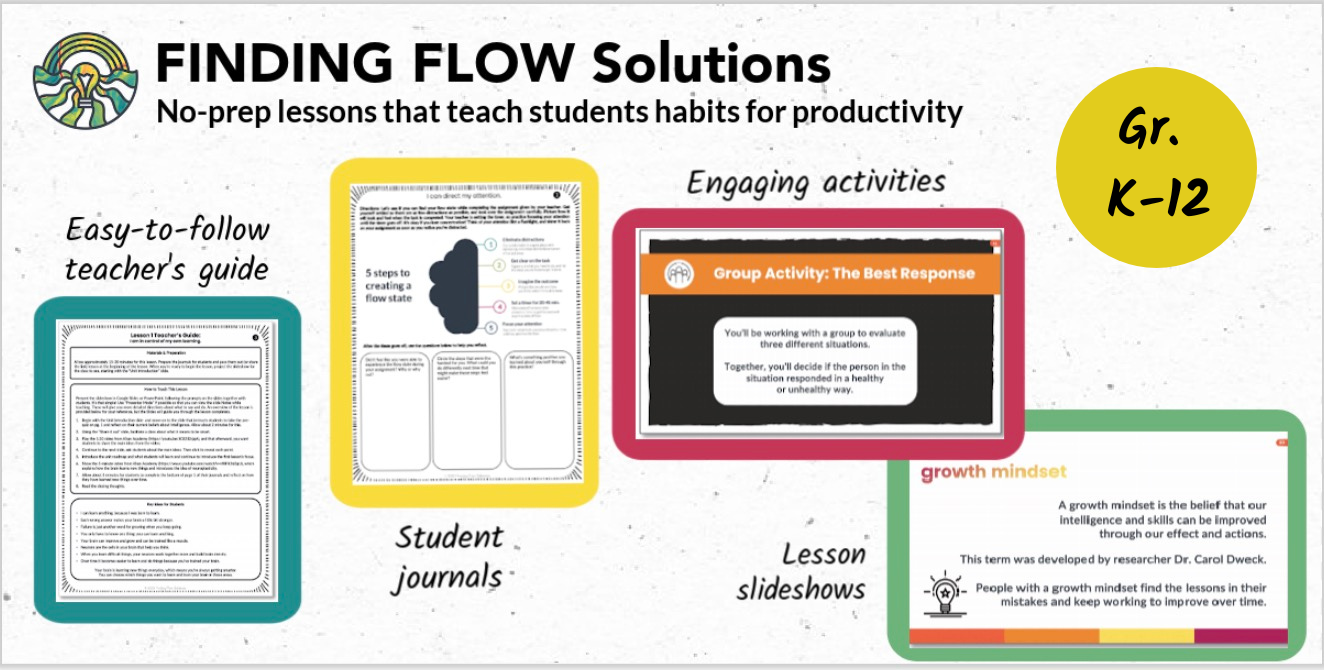
Even without a formal curriculum, the simple act of talking about this with students, being honest about your own habits, and creating a space where they can reflect without feeling judged, can be transformative all on its own.
We don’t have to give up our devices. That’s not realistic, and it’s not the point. Our phones are genuinely useful tools. The question is whether we’re choosing how we use them or just being pulled along, one notification, one spare moment, one “let me just check this real quick” at a time.
Every single time you notice yourself reaching for your phone and pause to ask whether that’s really what you want to be doing right now, you’re building a muscle. And when you do this work alongside your students, you’re modeling something they desperately need to see: an adult who’s honest about the same struggle they have and is choosing to do something about it.
Our phones are not the root of our distraction. They’re just the place we go when we hit a moment of boredom or discomfort and want to fill it with something. When we can sit with that moment instead of immediately reaching for a screen, when we can give our minds a little space to breathe and wander and just be, everything starts to shift. And we can teach our students to do the same.

The Truth for Teachers Podcast
Our bi-weekly podcast has received over 1,200 five star ratings + 9 million downloads. You can support our work by subscribing in your favorite podcast app for free!
Explore all podcast episodes


Angela Watson
Founder and Writer
Sign up to get new Truth for Teachers articles in your inbox
OR

Join our
community
of educators
Share ideas or get advice via our social channels.


